Daniel Chen, P.Eng.
December 12th, 2025
Please tell us about your personal background.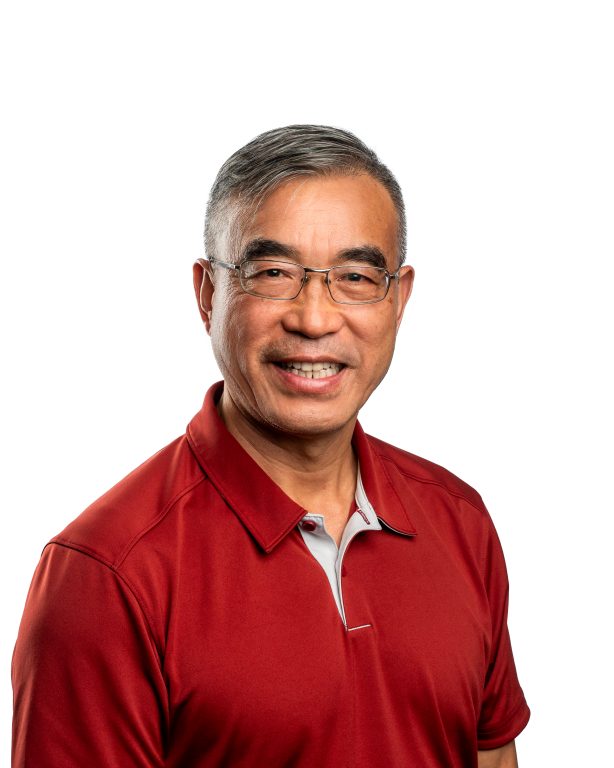
I was born and raised in China. In 1998, I moved to Saskatoon to pursue a Ph.D. in Mechanical Engineering at the University of Saskatchewan. I’ve been fortunate to have the unwavering support of my family—my wife and daughter—throughout this journey, especially when the path led us to Saskatoon and beyond.
Why did you choose engineering, and what is your area of specialty?
Before university, I didn’t give much thought to why I chose engineering. Looking back, I realize it was the right decision. Engineering aligns with my character and passion for creating new things and solving complex problems.
My specialty lies in mechanical and biomedical engineering, with a focus on bioprinting—an innovative technology that builds structures layer by layer by using biomaterials and living cells. These engineered scaffolds can be implanted in patients to repair damaged tissues or organs, such as those affected by heart attacks or osteoarthritis.
Where and when did you study and how would you describe your experience?
I earned my Ph.D. in Mechanical Engineering from the University of Saskatchewan in 2002 and completed a postdoctoral fellowship at Queen’s University. In 2003, I joined the University of Saskatchewan as a faculty member and became a full Professor in 2010. Reflecting on this journey, the interdisciplinary challenges and collaborations in biomedical engineering have profoundly shaped who I am today.
What are some of the most interesting, rewarding, and/or challenging experiences you have had?
Over the past two decades, my graduate students, research collaborators, and I have worked on projects aimed at repairing diverse tissues and organs, including peripheral nerves, spinal cord, articular cartilage, cardiac tissue, and tooth tissue, as well as on creating lung models out of body for studying disease and testing drugs and vaccine prior to their use in humans. We’ve made meaningful progress in the lab and in animal studies, moving closer to clinical applications.
What have you appreciated most about your engineering journey?
I deeply appreciate my graduate students and research collaborators. My students are the driving force behind these projects, and research collaborators bring expertise from multiple disciplines. Without their dedication and involvement, these projects would not have been possible or successful.
Any mentors or role models you’d like to tell us about? What insight or wisdom did they impart?
I’ve had the privilege of being mentored by many individuals who have shaped both my career and character, including my Ph.D. supervisors, research collaborators, and friends. Here I would like to give special thanks to my friends Dr. Peter Block (a retired surgeon) and his wife, Arlene Block, whose love, guidance and support have been invaluable to me and my family; we are truly fortunate to have them in our lives.
You were recently honoured with the University of Saskatchewan’s Distinguished Research Award. What does this recognition represent for you?
Receiving the University of Saskatchewan’s Distinguished Research Award is a tremendous honor. It represents recognition of the research that my graduate students, research collaborators, and I have pursued for more than 20 years.
What activities or interests do you enjoy outside of your professional pursuits?
Outside of work, I enjoy regular exercise—playing badminton, biking with my dog Murphy, and weightlifting. In the summer, I love fishing at Diefenbaker Lake and exploring Saskatchewan’s natural beauty. These activities help me recharge and appreciate life.
Anything else you’d like to add?
I’m passionate about mentoring the next generation of engineers and researchers. If I could share one message, it would be this: Engineering is not just about technology—it’s about improving lives.